How to Identify a Bug From a Photo
Count the legs, check the body parts and wings, note where you found it. Seven clues that name almost any bug from a photo, with a quick table of the main groups.

The Bug Ai team
Nov 18, 2026 · 4 min read
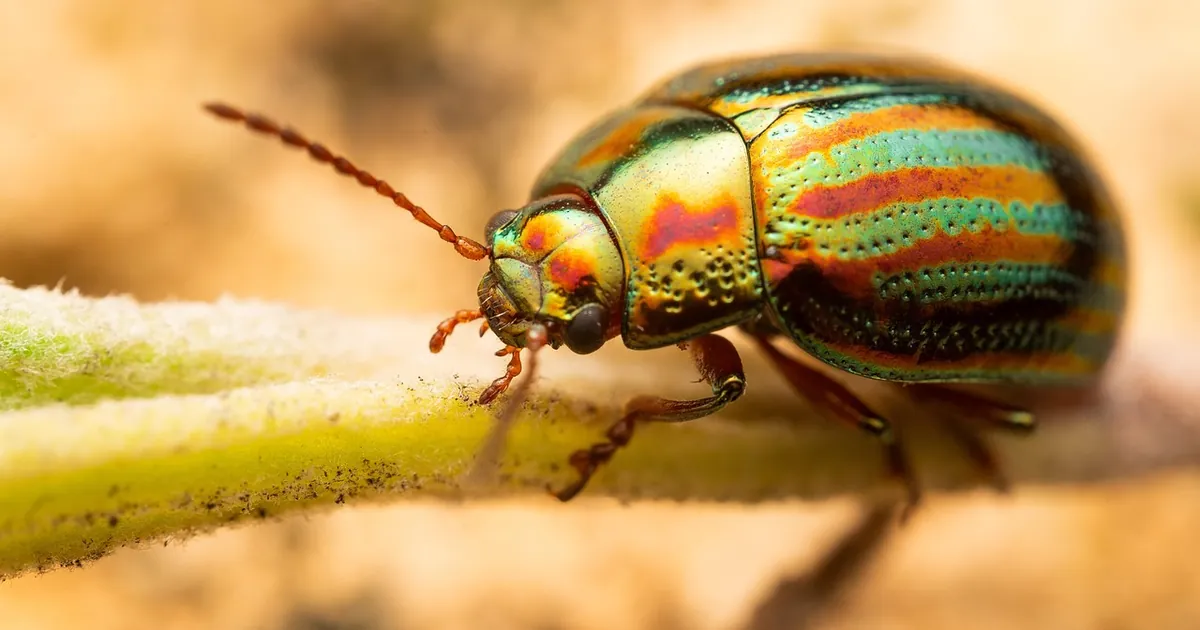
You find something crawling across the kitchen floor, the bathroom sink or your arm, and you want to know two things: what is it, and should I worry? Entomologists answer the first question with a short list of clues, always in the same order. You can use the same list with nothing but your phone camera.
1. Get a photo that can be identified
Most failed identifications are photo problems, not bug problems.
- Get close, not blurry. Use the zoom or tap to focus on the bug itself. A sharp small bug beats a big blurry one.
- Shoot from above and from the side. The back shows markings and wings; the side shows the legs, the mouth and the shape of the body.
- Use daylight. Flash flattens colours and hides fine hairs.
- Add something for size. A coin, a ruler or a fingertip nearby (not touching a biting bug) tells you whether it is 3 mm or 30 mm, which rules out half the candidates.
Never pick up a spider, a wasp or a fuzzy caterpillar to get a better angle. A clear glass placed over it does the job.
2. Count the legs
This one clue sorts almost everything:
- Six legs: an insect (beetles, ants, flies, bees, true bugs, moths).
- Eight legs: an arachnid (spiders, ticks, mites, scorpions, harvestmen).
- Many legs: a centipede (one pair per segment, flat, fast) or a millipede (two pairs per segment, round, slow).
- No legs: a worm, a slug, a leech or an insect larva such as a maggot.
Caterpillars look like they have lots of legs, but only the first three pairs are true legs. The rest are stubby prolegs that disappear in the adult.
3. Count the body parts
- Three parts (head, thorax, abdomen): an insect.
- Two parts (a joined head-and-thorax plus an abdomen): a spider.
- One oval blob: a tick or a mite. Harvestmen (daddy longlegs) also look one-piece, which is how you tell them from cellar spiders.
4. Look at the wings
Wings name the order of an insect faster than anything else.
| Group | Wings | Other clues |
|---|---|---|
| Beetles | Hard wing covers meeting in a straight line down the back | Chewing mouth; ladybugs, weevils, June bugs |
| True bugs | Front wings half hard, half clear, overlapping in an X or triangle | Piercing beak under the head; stink bugs, bed bugs, cicadas |
| Flies | One pair of clear wings | Big eyes, often short antennae; houseflies, mosquitoes |
| Bees, wasps, ants | Two pairs of clear wings, hooked together | Narrow waist; only queens and males of ants have wings |
| Butterflies, moths | Two pairs covered in powdery scales | Coiled tongue; butterflies have clubbed antennae |
| Grasshoppers, crickets | Leathery front wings | Big jumping back legs |
Many insects have no wings at all (fleas, lice, bed bugs, worker ants, silverfish), so a wingless bug is still worth a closer look.
5. Check the antennae and the mouth
- Antennae: clubbed (butterflies), feathery (many moths and male mosquitoes), elbowed (ants and bees), long and thread-like (crickets, longhorn beetles), or missing (spiders and ticks).
- Mouth: jaws for chewing (beetles, ants, caterpillars), a needle-like beak folded under the body (true bugs, including bed bugs and kissing bugs), a sponge (houseflies) or a coiled tongue (butterflies).
A beak folded under the head is worth noticing: it means the bug feeds by piercing, on plants, on other insects, or on blood.
6. Note where and when you found it
The same brown beetle means different things in a pantry, on a windowsill in spring, or in your bed.
- Indoors in bedding or furniture seams: bed bugs, carpet beetle larvae, fleas.
- In the pantry: grain beetles, weevils, meal moths.
- On windowsills in spring: carpet beetles, lady beetles, cluster flies trying to get out.
- Damp places (basements, bathrooms): silverfish, centipedes, springtails, cellar spiders.
- In the garden: aphids, beetles, caterpillars, orb weaver spiders.
The season matters too: many spiders wander indoors in autumn, ticks peak in late spring and early summer, and wasps get bold around food in late summer.
7. Watch how it moves
Behaviour is a clue a photo can't show, so write it down. Does it jump (jumping spiders, fleas, crickets)? Run fast on the ground (wolf spiders, centipedes)? Sit in a web (orb weavers, house spiders)? Play dead (many beetles)? Smell when disturbed (stink bugs)?
Let AI do the sorting
All of these clues are what an identifier app looks for in your photo. Our free bug identifier takes one photo, names the most likely species and gives it a danger level from 1 (harmless) to 5 (very dangerous), with one look-alike to check. For spiders, you can also browse our spider danger checker of the 20 spiders people find most in the US.
When to worry
Most bugs you find indoors are harmless or only a nuisance. A few deserve care:
- Shiny black spider with a red hourglass: a black widow. Leave it alone.
- Plain brown spider with a dark violin on its back in the South or Midwest: possibly a brown recluse.
- Small, flat, reddish-brown bugs in mattress seams: bed bugs.
- Ticks after time in grass or woods: remove them promptly.
- Wasps going in and out of a gap in a wall or the ground: a nest. Keep away and call a professional if it is near a door.
If something has already bitten you, our bug bite identifier asks five questions about the bite and lists the bugs that fit best, with first aid and when to see a doctor.
The Bug Ai app does all of this on your phone in a few seconds, with five scan modes for bugs, spiders, snakes, birds and animals, and keeps a list of everything you have found.
Frequently asked questions
Can you identify a bug from a picture?
Usually, yes. A sharp photo that shows the whole body, the legs and the wings is enough to name most common bugs to their family, and many to the species. Very small bugs and look-alike groups sometimes need a second, closer photo.
How many legs does a bug have?
Insects have six legs. Spiders, ticks, mites and scorpions have eight. Centipedes have one pair per body segment and millipedes two, so both have dozens.
Is a spider a bug?
Not to a scientist. Spiders are arachnids: eight legs, two body parts and no antennae or wings. In everyday speech, though, most people call any small crawling thing a bug.
What is the safest way to photograph a bug?
Use your phone's zoom or a macro lens instead of moving closer, and never pick up a spider, a stinging insect or a hairy caterpillar. A bug inside a clear jar or under a glass is easy to photograph safely.