Brown Recluse vs Wolf Spider: How to Tell Them Apart
Eyes, markings, legs, size and where you found it: the five checks that separate a harmless wolf spider from a brown recluse, plus what each bite does.
The Bug Ai team
Nov 22, 2026 · 4 min read
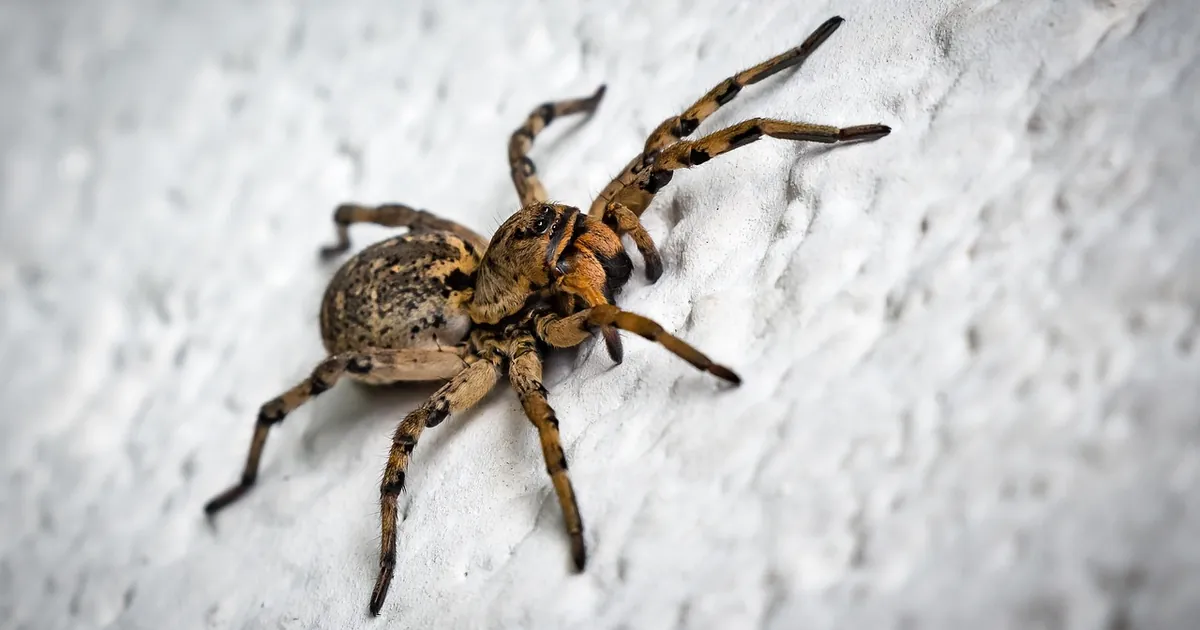
A brown, fast, hairy-ish spider runs across the floor and the first thought is "brown recluse". Nine times out of ten it is a wolf spider, which looks a little similar from across the room and is harmless. Five quick checks tell them apart. A close photo is enough for all of them.
1. Count the eyes
This is the most reliable check, and the one most people never try.
- Brown recluse: six eyes in three pairs, arranged in a shallow U across the front of the head, with a gap between each pair.
- Wolf spider: eight eyes in three rows: four small ones along the bottom, two very large eyes in the middle facing forward, and two more on top.
Wolf spider eyes reflect light. Shine a flashlight across a lawn at night and the little green-white sparkles you see are wolf spiders looking back.
2. Check the markings
- Brown recluse: plain, even colour, tan to dark brown, with a darker violin on the front part of the body. The neck of the violin points back toward the abdomen. The abdomen is a plain, uniform colour with fine short hairs and no pattern.
- Wolf spider: mottled grey, brown and black, with stripes running lengthwise, often a pale band down the middle of the back. No violin.
The violin can be faint on young recluses and some other spiders have dark marks in the same place, so treat it as a supporting clue, not proof. The eyes settle it.
3. Look at the legs
- Brown recluse: long, thin legs of one even colour, with fine hairs but no stripes, bands or spines.
- Wolf spider: thicker, hairy legs, often banded light and dark, with visible spines.
4. Compare the size
- Brown recluse: body 6 to 12 mm (1/4 to 1/2 inch); with legs about the size of a US quarter.
- Wolf spider: body 10 to 35 mm, depending on the species. The big Carolina wolf spider can span more than 3 inches with its legs.
A brown spider bigger than a half-dollar coin with its legs spread is very unlikely to be a recluse.
5. Think about where you found it
- Brown recluse: lives in the south-central and Midwestern US. Indoors it hides in undisturbed places: boxes in the garage, closets, attics, behind furniture, inside shoes and clothes left on the floor. It hunts at night and rarely shows itself.
- Wolf spider: lives almost everywhere in North America. It hunts on the ground, in lawns, leaf litter and gardens, and often wanders indoors in autumn, where you see it running across floors and along baseboards.
Two behaviours give wolf spiders away: females carry their round egg sac attached to the back of the body, and after it hatches they carry dozens of spiderlings on their back.
Side by side
| Trait | Brown recluse | Wolf spider |
|---|---|---|
| Eyes | 6, in three pairs | 8, two very large |
| Body | Smooth, plain tan, violin mark | Hairy, striped |
| Legs | One colour, no spines | Often banded, spiny |
| Size | Body 6–12 mm | Body 10–35 mm |
| Found | Boxes, closets, attics; South and Midwest | Floors, lawns, gardens; everywhere |
| Web | Small, messy retreat web | No web: hunts on the ground |
| Danger | Level 4: bite can become a spreading sore | Level 2: painful, not dangerous |
What each bite does
Wolf spider: a bite hurts like a bee sting and may swell and itch for a day. Wash it, use a cold pack, and it heals on its own.
Brown recluse: the bite is often painless at first. Most recluse bites stay small and heal on their own. In a minority, over hours to days the spot turns into a red patch with a pale or bluish centre, may blister, and can become an open sore that spreads and heals slowly. Rarely, especially in children, the venom causes fever and affects the blood.
After a suspected recluse bite: wash it, use a cold pack, raise the limb and keep it still. Don't cut it or squeeze it. See a doctor if it blisters, darkens or keeps spreading, or if you get a fever. In the US, poison control is 1-800-222-1222.
Many sores blamed on recluses, especially outside their range, turn out to be skin infections that need different treatment, which is another reason to have a doctor look at a bad one. Our bug bite identification guide covers the other usual suspects.
Other brown spiders mistaken for recluses
- Southern house spider (males): tan and long-legged, but with eight eyes clustered together.
- Grass and funnel weaver spiders: two dark stripes on the head.
- Cellar spiders: tiny bodies and very long, thin legs.
- Yellow sac spiders: pale yellow, with darker jaws.
Our spider danger checker has all of them with how risky each one is. Or take a photo from a safe distance and run it through the free bug identifier: it names the spider, gives a danger level and points out the look-alike to rule out. The Bug Ai app does the same on your phone, with first aid steps if you have been bitten.
Frequently asked questions
Are wolf spiders dangerous?
No. A wolf spider bite hurts like a bee sting and may swell a little, but it is not dangerous. They bite only when trapped or handled.
What does a brown recluse look like?
A plain tan to brown spider with a body about 6 to 12 mm long, a darker violin shape on the front of the body with its neck pointing back, six eyes in three pairs, and smooth legs without stripes or spines.
Where do brown recluses live?
In the south-central and Midwestern US, roughly from Texas and Georgia north to Nebraska, Illinois and Ohio. Outside that area they are very rare, and most brown spiders found there are something else.
Do wolf spiders have a violin mark?
No. Wolf spiders have stripes running lengthwise along the body, often a pale band down the middle, and no violin.