The Most Dangerous Spiders in the US
Only two groups of US spiders, the widows and the recluses, send people to hospital. How to recognise them, where they live, what their bites do, and the harmless spiders that get the blame.

The Bug Ai team
Nov 24, 2026 · 4 min read
Almost every spider in North America has venom: it is how they eat. Very few can hurt a person. In the United States only two groups are medically significant, the widows and the recluses. Everything else, including some big and scary-looking spiders, has at worst a bite like a bee sting.
Here is how to recognise the two that matter, what their bites do, and the harmless spiders that get blamed for them.
Widow spiders (Latrodectus)
Danger level 4 of 5. Venom that affects the nerves.
Black widows
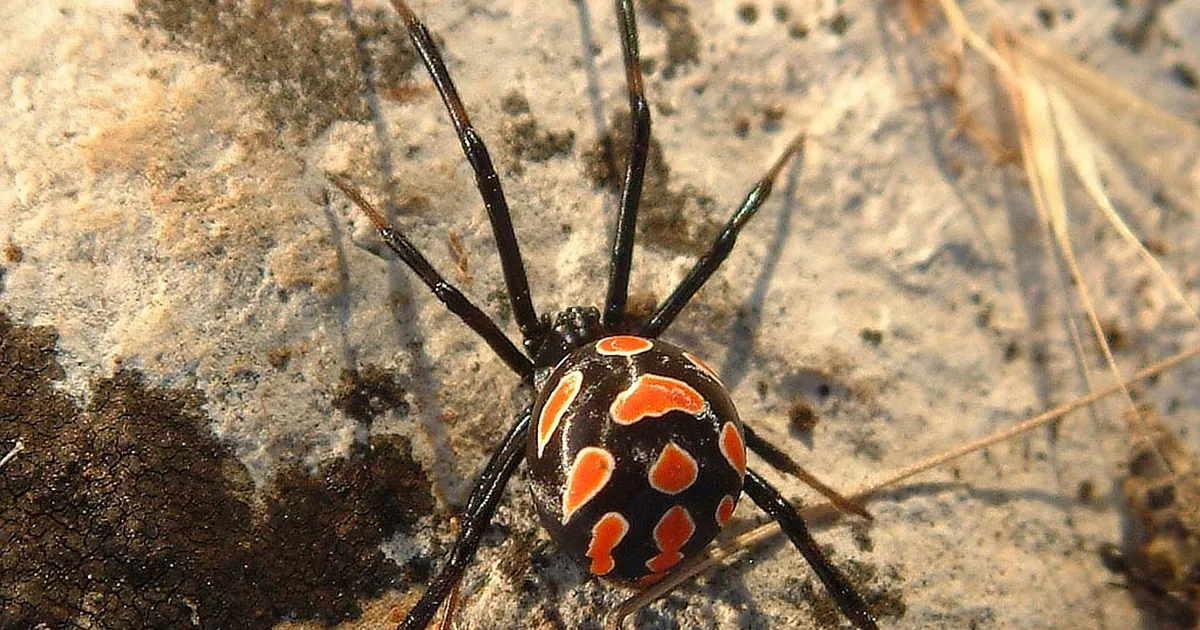
The US has three: the southern black widow (South and East), the western black widow (West) and the northern black widow (Northeast and Great Lakes).
- Looks: females are shiny, jet black, with a round, glossy abdomen and a red hourglass on the underside. Some have red spots on the back. Body 8 to 13 mm, about 1.5 inches with legs. Males are small, brown and harmless.
- Web: a tangled, messy, very strong web, low down.
- Where: woodpiles, sheds, garages, meter boxes, under outdoor furniture, in old tyres and in the corners of crawl spaces. They rarely come into living areas.
Brown widow
- Looks: tan to brown with an orange hourglass and a geometric pattern on the back. Its round egg sacs are covered in little spikes, which is the easiest way to spot one.
- Where: warm states: Southern California, Texas, the Gulf Coast and Florida, often under patio furniture and in mailboxes.
- Bite: its venom is as strong as a black widow's, but it injects far less, so bites usually cause only local pain.
Red widow
Found only in the sand pine scrub of central and southern Florida. Red legs and head, black abdomen with red spots. Rarely meets people.
What a widow bite does
A widow bite feels like a pinprick. Within an hour or so, cramping pain spreads from the bite into the large muscles: the belly, the back, the chest or the thighs. Sweating, nausea, a fast heartbeat and restlessness can follow. Symptoms usually peak within a day and fade over several days.
What to do: wash the bite, put a cold pack on it and get to urgent care or the ER, especially for a child or an older adult. Pain relief works well, and an antivenom exists for severe cases. In the US, call poison control on 1-800-222-1222 for advice.
Recluse spiders (Loxosceles)
Danger level 4 of 5. Venom that damages tissue.
Brown recluse
- Looks: plain tan to brown, body 6 to 12 mm, legs about the span of a quarter. A darker violin on the front part of the body, neck pointing back. Six eyes in three pairs (most spiders have eight). Smooth, evenly coloured legs with no spines or bands.
- Where: the south-central and Midwestern US, roughly Texas and Georgia north to Nebraska, Illinois and Ohio.
- Habits: shy and nocturnal. Indoors it hides in boxes, closets, attics, behind pictures, and inside clothes, shoes and bedding left on the floor. Most bites happen when someone presses one against their skin.
Other recluses
The desert recluse lives in the deserts of the Southwest and rarely meets people. Small, localised populations of the introduced Chilean and Mediterranean recluses have been found in a few places.
What a recluse bite does
Often painless at first. Most recluse bites stay small and heal without treatment. In a minority, the spot becomes a red patch with a pale or bluish centre over a few hours, may blister, and can turn into an open sore that slowly spreads and takes weeks to heal. Rarely, mostly in children, the venom causes fever, a rash and damage to red blood cells.
What to do: wash, use a cold pack, raise the limb and keep it still. Don't cut it, squeeze it or put heat on it. See a doctor if the bite blisters, darkens or spreads, or if you get a fever.
Outside the recluse's range, a sore blamed on a "spider bite" is much more likely to be a skin infection, which needs different treatment. Our guide to brown recluse vs wolf spider shows how to tell a recluse from the spider most often mistaken for one.
Painful but not dangerous
These can give you a bite you'll remember, but not one that harms you:
- Yellow sac spiders: pale yellow, night hunters that wander onto walls; a painful bite that can leave a small sore.
- Wolf spiders: big, hairy ground hunters; a bite like a bee sting.
- Fishing and huntsman spiders: large, fast; painful bites, no lasting harm.
- Tarantulas: slow and rarely bite; the hairs they flick can irritate skin and eyes.
- False black widows: round, dark, no red hourglass; mild pain or sweating near the bite.
Harmless spiders that get the blame
- Hobo spider: once blamed for recluse-like wounds in the Pacific Northwest; research since has found no good evidence that its bite is dangerous.
- Daddy longlegs: the story that it is the most venomous spider but has fangs too short to bite is a myth on both counts.
- Jumping spiders, house spiders, orb weavers and grass spiders: harmless, and they eat the insects you don't want.
How to avoid bites
- Wear gloves to move firewood, boxes and garden debris.
- Shake out shoes, gloves and clothes that have been on the floor or in the garage.
- Move beds away from walls and keep bedding off the floor in recluse country.
- Store things in sealed plastic boxes instead of cardboard.
- Seal gaps around doors and windows and keep woodpiles away from the house.
Not sure which spider you have? Find it in our spider danger checker, or take a photo from a safe distance and run it through the free bug identifier for the species and a danger level. If you've already been bitten, our bug bite identification guide helps you work out what did it.
Frequently asked questions
What is the most venomous spider in the US?
The black widow. Its venom acts on the nerves and can cause severe cramps and pain, though deaths in the US are very rare today and treatment is effective.
Are there deadly spiders in the US?
Deaths from spider bites in the US are extremely rare. Black widow and brown recluse bites can make people very ill, especially young children and older adults, so they deserve a doctor, but almost everyone recovers.
Is the hobo spider dangerous?
No longer thought to be. It was blamed for wounds like a recluse's in the 1980s and 90s, but later research found no good evidence its bite is dangerous.
Are camel spiders or daddy longlegs dangerous?
No. Camel spiders (sun spiders) have no venom, and both harvestmen and cellar spiders, the two animals called daddy longlegs, are harmless to people.